
By: Jack Howes.
12th March 2026.
I wake up every morning feeling sick. As a lifelong Spurs fan with season tickets for the men and women’s teams, born in Enfield and currently able to see the Spurs stadium out of my living room window, the prospective relegation of the men’s team isn’t making my bum squeak so much as play its own sonata.
Post Tottenham Stress Disorder may not be a mental illness categorised in the DSM yet, but a few more gutless defeats and psychiatrists around the world cash in on Spurs fans’ trauma, guiding us insquare breathing techniques to use when we remember Conor Gallagher is on £200,000 a week.
Amidst the doom and gloom of the Premier League where Spurs and Arsenal are at wrong ends of the table, Spurs Women have been my, and many others’, sole source of footballing joy. Which brings us to the burning question: presuming a miracle-working-manager is not discovered under a stone in Tottenham and Spurs men are relegated, will the women’s team be impacted? Or to put it bluntly, will men, twas ever thus, ruin everything for women?

It’s not an unreasonable concern. If and when relegation for the men is confirmed, Spurs’ overall revenue is forecast to drop from around £600m to £350m a year. The women’s team makes a loss every year and CEO Vinai Venkatesham, who has done great things for the women’s team, bears a lot of responsibility for the fiasco on the men’s side and is reportedly unlikely to remain at the club long-term.
With the arrival of a new CEO who may not have the same interest in the women’s team, and club revenues falling by over 40 percent the doomsday scenario would see spending on Spurs Women halted and a promising young team sold for parts.
For a few reasons, I hope and think this will not be the case. First, the costs of running Spurs Women are relatively low; in the most recently published accounts, for the 2023-24 season, overall expenditure was £7m – a drop in the ocean for a club of Spurs’ size. That season the women’s side made £4.3m in revenue, helped by a run to the FA Cup final, meaning net losses for the side of about £2.7m.
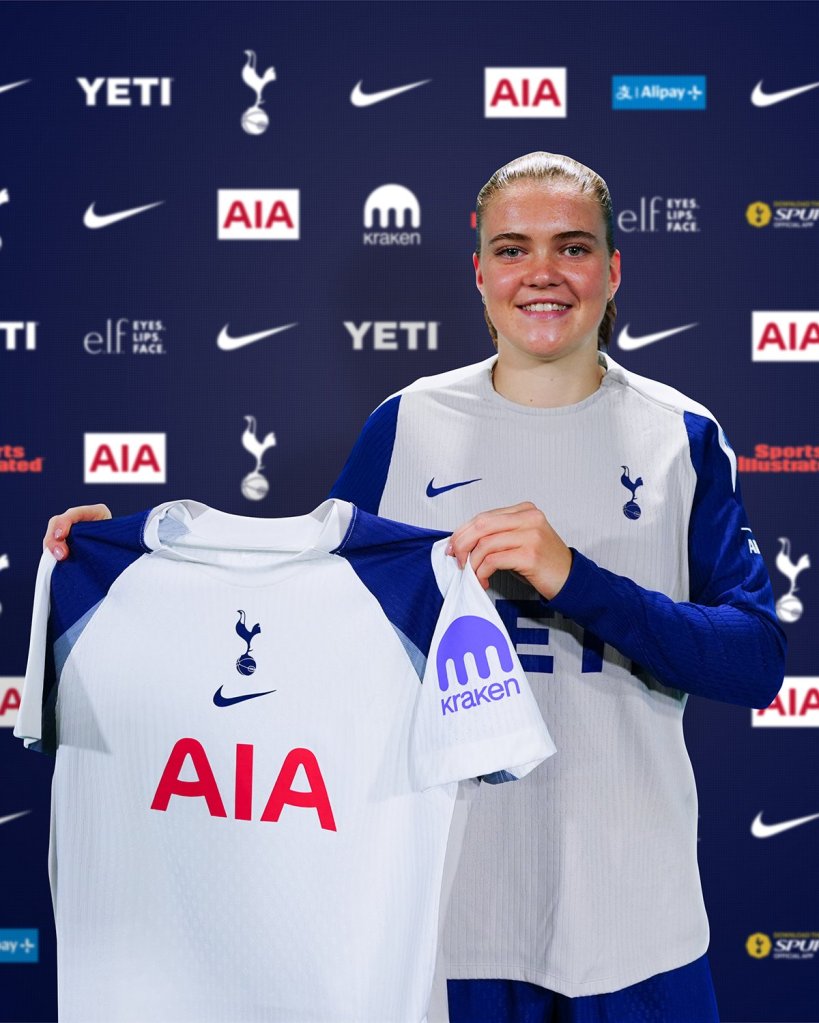
Two seasons on, Spurs are spending considerably more on the playing squad, with £1m cumulative outlay on Toko Koga, Cathinka Tandberg, Signe Gaupset and Matilda Nilden across the last two transfer windows. The wage bill is presumably also rising, with the signing of those players alongside a glut of free agents.
Given those increases, plus the cost of replacing an entire coaching staff last summer, I estimate we are currently spending closer to £10m on the women’s team. With relatively little attendance growth, revenues will likely have remained at similar levels, perhaps increasing slightly on the back of the most recent record-breaking WSL TV deal. Taking all of this into account, I estimate the annual loss from the women’s team at about £5m a year currently.
If Spurs Women are indeed losing around £5m a year what might that mean? Even if the club’s incomings drop to £350m, £5m would represent only 1/70th of the club’s revenue. In other words, Spurs Women make up a relatively small part of Tottenham’s business structure. Conversely, the team generates fans and press attention at a level disporportionate to the money spent on it.
Additionally, it has taken considerable time for Spurs Women to progress up the table, with good results this season demonstrating the huge progress we’ve made on and off the pitch. If we were now to sell players, or merely scrimp on the fees or wages needed to sign new players this summer, we would be doing this at a time when spending on the women’s game is increasing exponentially. To recover lost ground in years to come we would therefore need to spend several times the amount saved. Ultimately, if the club want a competitive women’s team making cuts now just means having to spend a lot more later.
Spurs Women are also one of the few sources of positive PR the club currently possess – a good young team, beloved by its core fanbase, playing a style of football befitting the club’s values, garnering increasingly positive traction on social media and from the press. Cutting back on the women’s team to atone for failings on the men’s side would save relatively trivial sums (at least in footballing terms) and would be a PR disaster – one that would rank alongside Manchester United’s plan to make their women’s team train in portakabins.
Additionally, if Spurs men go down then next season there may be more focus on the women, as the only Spurs side playing in the top tier. That will bring pressure, particularly from the press. And it will be up to Spurs Women to uphold the club’s honour, preserve a modicum of club dignity and, most importantly, avoid the fate that has befallen the men. In the face of such attention, failing to invest in the team, or selling key players, would be catastrophic.
In a round-about way it is possible that relegation for the men will create an opportunity for Spurs Women. More focus on the women’s team will mean more pressure but if the squad and coaching staff harness it effectively and have another a good season, it could increase interest in the side. Fans of the men’s team, shorn of the usual fixtures against Arsenal, Chelsea, West Ham et al, may even be more inclined to go and watch Spurs Women. I would not be shocked to see the women’s team attract new fans, particularly for away games at the Emirates and other Premier League grounds. And if these new fans like what they see, maybe they will continue to watch and support the team.
Alongside that, a Spurs men’s side winning matches and boosting the vibes, even in a lower division, might perversely also do the women’s team some good. An under-rated factor in Spurs Women’s disappointing crowds this season has been Spurs Men destroying the club’s vibes and making fans of the men’s team, who many of us hoped could be won over to Spurs Women, to want as little Tottenham in their lives as possible. So, while these words may look daft in 12 months’ time, there is a chance that Spurs men in the Championship may bring some feelgood factor back to the club. After all they could actually start winning again – and make attending games less of the torture it is currently. If so, perhaps the women’s team will attract more fans.
To butcher a really promising team and create another self-made PR disaster, for the sake of saving a couple of million quid, would be incomprehensibly foolish. I am *fairly* confident that Spurs will not be this foolish, and that even under a new CEO, Spurs Women will get the investment needed to continue progressing.
With bated breath, we wait to see what unfolds…
 Spurs Women Blog
Unfortunately, dont agree.
Its inevitable that there will be a drop-off in financial support if they are relegated. Most of the available money will be thrown at an immediate return to the cash cow that is the Premier League, and I think common sense tells you the Women will be put on a back-burner.
There is precedent as well. Look at Leicester. Given resources to gain promotion to the WSL, recruited well initially, and now find themselves completely under-funded and staring relegation in the face following the collapse of the mens team, which may well see them relegated to League One.
LikeLike
Jumped on quickly after Everton defeat.
Its going to upset the fanbase but needs to be difficult conversation in the Summer with Bartrip. Always known that Rybrink is not up to the level due to lack of pace, but our captain today was constantly caught out of position, has no threat awareness and lacks pace to defend in modern day WSL.
Everton thoroughly deserved the win.
LikeLike
Agree Xander … the whole back 4 plus Kop it Kate were poor and left gaping holes in the defence (Blakstad was always left behind) .. then with Summanen having a mare of a game and Vinberg/Gatwick on the wings doing nothing just goes to show Ho doesnt really know how to set up a team to win. Another reason why we give out extns too easily and we can add Bartrip to that pile as well. Not playing for a month killed our forward push and too many players coming back with Intl mindset and not WSL. Everton knew how to beat us and we didnt know how to beat them – our push for top 4 is well and truley over now and we will be lucky to get the 4 points we need to break the record now. Real shame but Ho caught a cold and Kop it Kate didnt catch the ball yet again and left too much space open and why I keep saying WE NEED A BETTER GK.
LikeLike
Terrible first half. Less said the better.
However, first choice centrebacks return next week and Eveliina will have benefitted from only playing for 20 minutes this week.
I actually prefer Holdt playing off a wide position – it makes it harder for opponents to pick her up – fullbacks don’t like getting dragged inside when she drifts infield, so would line up next week like this;
Kop
Wijk, Koga, Hunt, Nilden
Summanen, Spence, Gaupset
Hamano, Tandberg, Holdt.
LikeLike
Well that hope was quickly extinguished with the news about Clare Hunt.
Toko Koga is an exceptional player, but I fear it may even be beyond her powers to drag Molly Bartrip up to the required standard for Top 5 of WSL.
Normally quite an optimist but this feels like season over. Only hope is that Chelsea sacrifice the FA Cup to concentrate on securing a top 3 finish and a continuing run in Champions League.
Roll on the Summer. Though not sure much we can do when players are tied to contracts – perhaps can say to them “not part of plans and you’re therefore free to seek other options”?? But if they dont want to leave, not a lot that can be done.
LikeLike
I agree Xander – our season is well and truley over and I predict that we wont even get the 4 points needed for a new WSL record certainly not with Clare out and Kop’s Goalkeeping which is frought with risk every time an attack comes our way. I just cannot see it. Why? becos when we exit the tunnel of doom after the ManU game we will probably have lost 5 games on the trot and will then face LCL who will probably have caught us up and wanting 5th.
Martin often does not have a solid game plan against tough hard press teams and then for some reason he keeps taking our best players off in the 2nd half – probably the medical team rule the touchline warding off ACL injury. We really needed 2/3 more better players last Jan from the list that Yohannes posted, one being a top CB, another being a top creative midfielder and another Striker or lethal RWA …. all were available and yet we let them go to the opposition. Season over for me and hope someone is researching players for the Summer and let the likes of Heeps Thomas Csiki Vinberg AJT Buhler Ahtinen Graham maybe even England finally leave and rebuild again assuming Viv Lewis will still invest.
LikeLike
Heeps & Csiki under contract until 2028.
Grant, Ahtinen, Vinberg, Graham, England all have contracts up this Summer, as well as Buhler and I assume AJT.
LikeLike
I would hope that with Csiki and Thomas out on loan that would mean we are up for moving them on rather than bring these uninspiring players back. As for Heeps, yes I know that but we either move her on and drop Kop to No2 to make room for a much better GK or we try loan Kop out but Im not sure Heeps is really good enough for top WSL football. As for the rest of the 26 cohort -we have to let them go, even Beth (maybe she could be signed up to be a Coach for the unders and keep her at the club)
The fact that Olivia just extended has to show the club still wants to redevelop and progress – thats is great news indeed. We just need Amanda to be offered the same. I think we need another 4/5 players in the summer and probably another 3 in Jan whilst we cut out the remaining deadwood. I guess however the development of whitewebbs goldf course will be stalled if the men get relegated and that will be a massive set back for the women’s new facilities which they really deserve.
LikeLike
Vinberg has re-signed. Not sure on that one to be honest. For squad depth? Ok. But never really done enough, in my opinion.
LikeLike
I just cant believe it !!! She Naz Gatwick & Dennis are not good wing attacks and never will be yet these positions are the key to our attack. Yes in the interview she talks the talk but rarely can walk the walk. Hamano is good but will she ask for a transfer remains to be seen? so we need to stregthen both the wings, another striker, 1 or 2 new center midfielders, another top Centre back and a far better GK.
After yesterdays news with Olivia – this is a downer for me big time. I hope we dont do same with Ahtinen Buhler Rybrink AJT … maybe Grant is worth another year to see what she can bring … then comes Beth .. personally I would offer her a coaching role to stay at the club helping develop the young guns and we get a lethal younger striker in. COYSW
LikeLike
Embarassing – 12 goals shipped in 3 games – have we learnt anything? Nah .. the next 2 will also be “by how many” games.
LikeLike